You've just finished a kitchen refit. You worked long days, sourced quality materials, and the client is over the moon — but when you run the numbers, you barely broke even. Sound familiar? For many tradespeople, underpricing isn't a one-off mistake; it's a pattern that slowly drains the business dry.
The good news: pricing a job accurately isn't complicated once you have the right method. Here's how to do it every time.
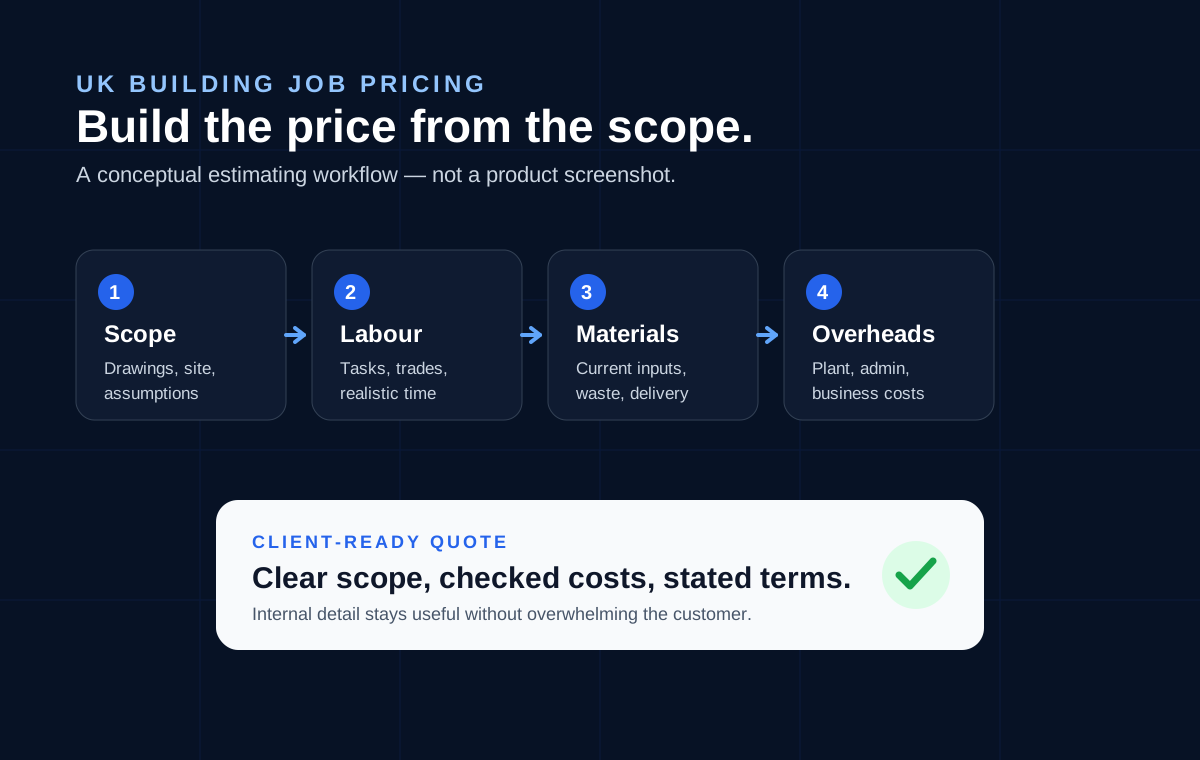
Step 1: Cost Everything Before You Quote
The most common pricing mistake is quoting from memory or gut feeling. Instead, break every job into its component parts before you put a number on paper.
Start with materials. Get actual supplier prices — don't rely on last year's rates. Add a 10–15% buffer for wastage, offcuts, and small consumables you'd otherwise forget to charge for. Then list every item explicitly: fixings, adhesive, filler, PPE used on-site.
Next, estimate labour hours honestly. Think about the worst-case scenario, not the best. Add travel time if the job is far from your base. Include time spent on the quote itself, on-site surveys, and chasing sign-off.
Finally, include any subcontractors, plant hire, or skip hire. These are real costs and must be in the quote.
Step 2: Know Your True Hourly Rate
Many tradespeople charge what they think sounds reasonable, or what they've heard competitors charge. This approach is dangerous because it ignores your actual cost of running a business.
Your true hourly rate needs to cover: your own salary, employee wages and NI contributions, tools and equipment depreciation, insurance (public liability, employers' liability, van), fuel and vehicle costs, software subscriptions, and a profit margin on top.
Work backwards from the annual revenue you need to be profitable. Divide that by the number of billable hours you can realistically work in a year — typically 1,200–1,600 for a sole trader once you account for holidays, training, and admin. That gives you your minimum hourly rate.
Step 3: Apply a Consistent Margin
Profit isn't what's left over — it's something you build in from the start. A healthy trade business typically targets 15–25% net margin depending on the type of work and volume.
Once you have your total costs (materials + labour + overheads), apply your margin on top as a percentage. If your costs are £2,000 and you want a 20% margin, your quote is £2,500. This simple formula ensures you're always building in profit rather than hoping for it.
Step 4: Add Contingency for Complexity
Every experienced tradesperson has been caught out by a job that turned ugly — hidden damp, structural issues, materials delivered late, a client who keeps changing their mind. Build a contingency allowance into quotes for complex or first-time jobs: 5–10% of total costs is a reasonable buffer.
Be transparent with clients: "This includes a contingency allowance for any unforeseen issues. If the job runs smoothly, we'll credit the difference." Clients respect honesty, and it protects your margin if things go sideways.
Accurate pricing comes down to discipline: cost everything, know your true rate, apply a real margin, and protect yourself from surprises. Do this consistently and your business stops feeling like a lottery and starts behaving like a proper enterprise. The tradespeople who last aren't necessarily the best at the craft — they're the ones who master the numbers.