Markup and margin both describe the commercial space between what a job costs and what you charge, but they are calculated differently. Confusing them can make a quote look profitable while leaving the business with less return than expected.
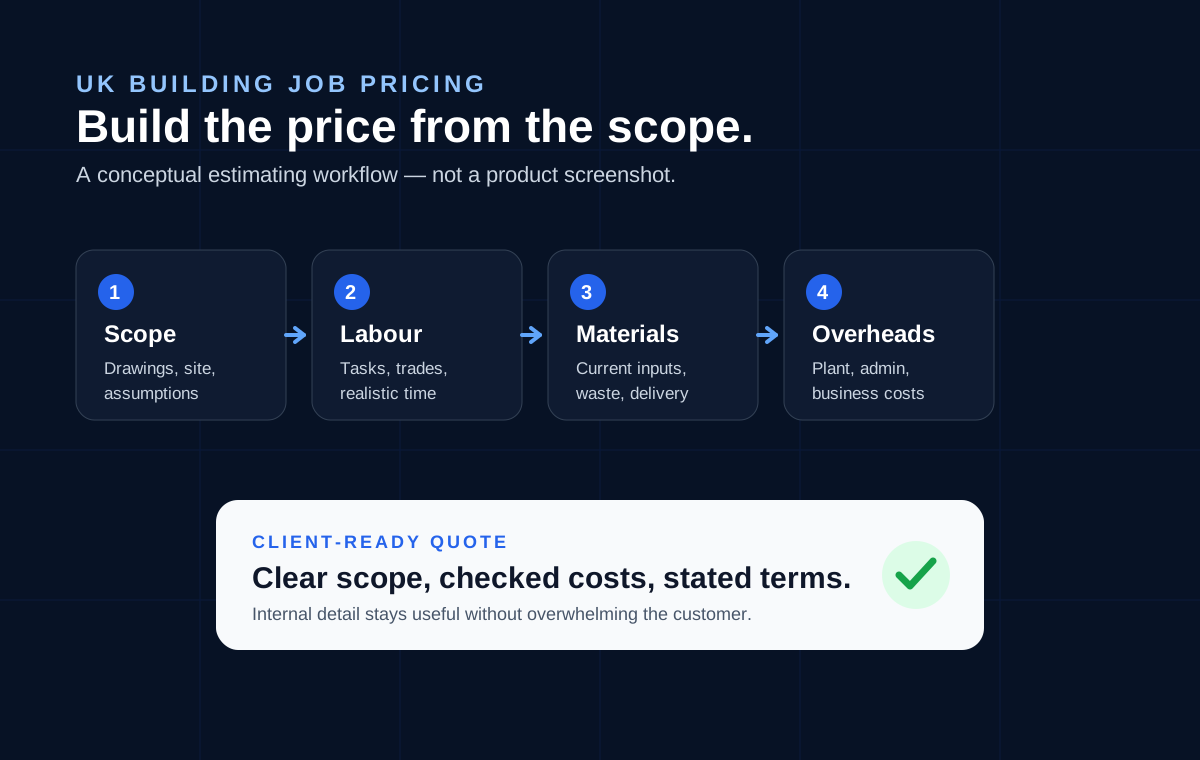
For a trade business, the aim is simple: recover the real cost of delivering the work, cover the overhead of operating the business, and leave enough profit to make the risk worthwhile. That starts with a reliable cost base.

Markup versus margin
Markup is the percentage added to your cost. If a job costs £10,000 and you apply a 20% markup, the selling price is £12,000.
Margin is the percentage of the selling price that remains after the cost is removed. On a £12,000 price with £10,000 of cost, the margin is £2,000, or 16.67% of the selling price.
The formulas are:
Price with markup = cost × (1 + markup percentage)
Margin percentage = (selling price − cost) ÷ selling price
Build the cost before choosing the percentage
Do not start by asking what competitors charge. Start by building the cost of your own job. Include labour hours, employee on-costs or your fully loaded rate, materials, delivery, waste, plant, subcontractors, travel, access, and any allowance that is likely to be consumed.
Then consider overhead. Your van, insurance, software, phone, tools, office costs, training, and time spent on non-billable administration still need to be recovered. You can allocate overhead as an hourly rate or include it within your labour rate, but it should not disappear simply because it is not visible on the client's scope.
A simple worked example
Imagine a quote with £4,000 of direct labour and materials. You decide that the job needs £500 of allocated overhead and a 20% markup on the full cost.
Your cost base is £4,500. A 20% markup adds £900, making the pre-VAT price £5,400. The profit before tax is £900, which is a 16.67% margin on the selling price.
If you wanted a 20% margin rather than a 20% markup, the calculation would be different: £4,500 ÷ (1 − 0.20) = £5,625. That price leaves £1,125 after cost, which is 20% of the selling price.
Should you apply markup to materials?
Many contractors apply markup to materials because purchasing, collecting, checking, transporting, storing, and managing those materials creates real work and risk. Others prefer to recover that effort through the labour rate or a separate procurement charge.
There is no single percentage that works for every trade or project. The important point is consistency. Choose a method, understand what it recovers, and make sure the quote does not leave small materials and delivery work unpaid.
Where contingency fits
Contingency is not the same as profit. It is an allowance for uncertainty, such as difficult access, hidden defects, variable ground conditions, or incomplete information. For a defined scope, explain what the allowance covers. If the work is not needed, state how it will be treated.
A quote that hides uncertainty inside an unexplained total can create suspicion. A quote that states the allowance gives both sides a clearer basis for a conversation if the scope changes.
The best construction markup calculation is the one your team can repeat. Cost the work properly, decide whether you are targeting markup or margin, allocate overhead, explain allowances, and check the final number before the client sees it. That is how a quote becomes a commercial decision rather than a guess.